

 Send Inquiry
Dimethyl Formamide
Price 90.0 INR/ Kilograms
MOQ : 100 Kilograms
Dimethyl Formamide Specification
- Solubility
- Miscible with water and most organic solvents
- Appearance
- Colorless, clear liquid
- Density
- 0.944 Gram per cubic centimeter(g/cm3)
- Molecular Weight
- 73.09 g/mol
- Storage Instructions
- Store in cool, dry, well-ventilated area in tightly closed containers, away from heat and ignition sources
- Ph Level
- Neutral pH (~7)
- Odour
- Slightly ammonia-like, fishy
- Chemical Name
- Dimethyl Formamide
- Other Names
- DMF, N,N-Dimethylformamide
- Classification
- Organic Solvent
- CAS No
- 68-12-2
- Type
- Industrial Chemical, Solvent
- Application
- Pharmaceuticals, chemical manufacturing, fibers, plastics, adhesives, resins, agrochemicals
- Application Method
- Used as a solvent or intermediate in synthesis
- Raw Material
- Methanol and formic acid
- Physical State
- Liquid
- Usage
- Industrial solvent, chemical synthesis, catalyst support
- Shelf Life
- 24 months from date of manufacture
- Purity(%)
- 99.8%
- Drying Time
- Not applicable (solvent evaporates)
- Best Before
- 24 months under proper storage
- Net Weight
- 200 kg (typical drum)
- UN Number
- UN 2265
- Stability
- Stable under recommended storage conditions
- Toxicity
- Toxic by inhalation, ingestion, and skin contact
- Melting Point
- -61C
- Hazard Class
- 3 (Flammable Liquid)
- Packaging Type
- HDPE Drum
- Auto-Ignition Temperature
- 445C
- Flash Point
- 58C (Closed cup)
- Boiling Point
- 153C
- Regulatory Information
- Complies with industrial chemical standards
- Vapor Pressure
- 2.7 mmHg at 20C
- Refractive Index
- 1.4305 at 20C
Dimethyl Formamide Trade Information
- Minimum Order Quantity
- 100 Kilograms
- Payment Terms
- Cash in Advance (CID)
- Supply Ability
- 1000 Kilograms Per Month
- Delivery Time
- 5-7 Days
- Main Export Market(s)
- Asia, Australia, Central America, North America, South America, Eastern Europe, Western Europe, Middle East, Africa
- Main Domestic Market
- All India
Dimethyl Formamide About
Dimethylformamide (DMF) is a clear, colorless to pale-yellow polar aprotic solvent widely used in industrial and laboratory applications. , it is completely miscible with water and most organic liquids, making it a highly versatile "universal solvenExcellent Solvent for Diverse Industries
Dimethyl Formamide's versatility as a solvent makes it invaluable for the production of pharmaceuticals, synthetic fibers, plastics, adhesives, resins, and agrochemicals. Its ability to dissolve a wide variety of compounds and high purity rating ensures exceptional performance in complex chemical syntheses, supporting both small-scale and industrial manufacturing processes.
Safe Handling and Storage Recommendations
As a flammable and toxic chemical, DMF should be handled only in well-ventilated areas, using appropriate personal protective equipment. Store tightly sealed HDPE drums in cool, dry spaces, away from heat or ignition sources, to ensure product stability and user safety throughout its 24-month shelf life under recommended conditions.
FAQ's of Dimethyl Formamide:
Q: How should Dimethyl Formamide (DMF) be safely handled and stored?
A: DMF should be handled with care, using personal protective equipment such as gloves and goggles, and only in well-ventilated areas to minimize inhalation risks. Store the chemical in tightly closed HDPE drums at a cool, dry, and well-ventilated location, away from direct heat, sparks, and ignition sources, to prevent accidents and maintain product stability.Q: What are the main industrial applications of Dimethyl Formamide?
A: Dimethyl Formamide serves primarily as a highly efficient solvent and intermediate in pharmaceuticals, chemical manufacturing, synthetic fibers, plastics, adhesives, resins, and agrochemicals production. Its broad solubility and stability make it ideal for these diverse applications.Q: When should DMF be replaced or disposed of during use?
A: DMF remains effective for up to 24 months from its manufacture date when stored properly. Replace or dispose of the solvent as recommended by safety guidelines after this period or if contamination, excessive evaporation, or degradation is observed.Q: Where is DMF typically used within industrial processes?
A: DMF is widely utilized in laboratories and production plants involved in chemical synthesis, biotechnology, and the manufacturing of pharmaceuticals, polymers, and adhesives. Its role as a solvent and reaction medium is crucial in these sectors.Q: What benefits does using DMF bring to manufacturing and chemical synthesis?
A: DMF offers high purity, broad solubility, and stability under operating conditions, enabling efficient chemical reactions, cleaner product yields, and compatibility with various industrial requirements. Its extensive miscibility enhances process flexibility.Q: What processes or methods are used to apply DMF in production?
A: DMF is commonly added to reaction mixtures as a solvent, facilitating dissolution of reactants or acting as an intermediate in chemical transformations. Application methods depend on the desired end-products and typically follow strict safety and procedural protocols.Q: Is DMF compatible with water and what is its physical appearance?
A: DMF is completely miscible with water and most organic solvents, making it highly versatile in formulation. It appears as a colorless, clear liquid with a mild ammonia-like or fishy odor.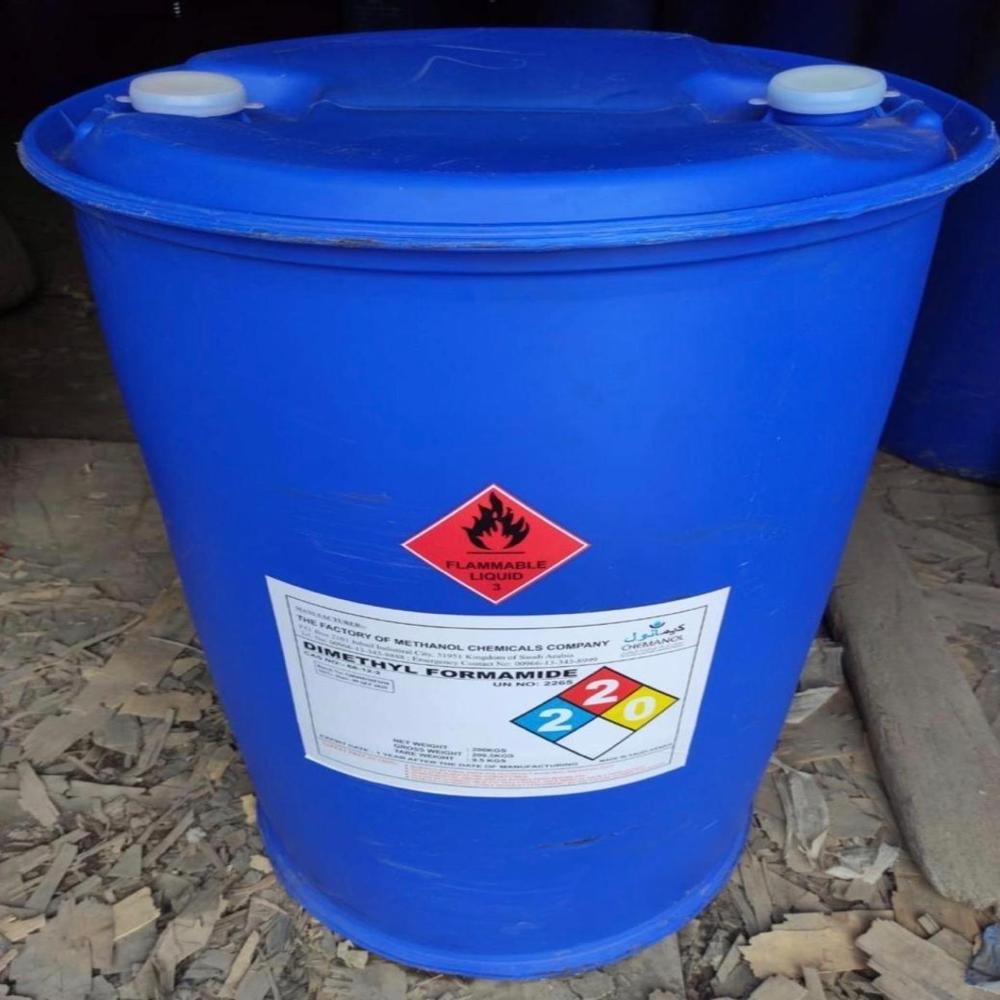
Tell us about your requirement

Price:
Quantity
Select Unit
- 50
- 100
- 200
- 250
- 500
- 1000+
Additional detail
Mobile number
Email

More Products in Solvents Category

Contact Details

- Plot No. 3002, F-1, Multilevel Shed, Near Kanoria Chemical,Ankleshwar - 393002, Gujarat, India
- Phone : 08071791507
Shubh Chemicals
GST : 24DUZPK7115N2ZS


- Mr. Gunjan (Sales Manager)
- Mobile : 08071791507
- Send Inquiry
 Send Inquiry
 Send Inquiry
 Send SMS
Shubh Chemicals
All Rights Reserved.(Terms of Use)
Developed and Managed by Infocom Network Private Limited.
Developed and Managed by Infocom Network Private Limited.


 English
 Spanish
 French
 German
 Italian
 Chinese (Simplified)
 Japanese
 Korean
 Arabic
 Portuguese